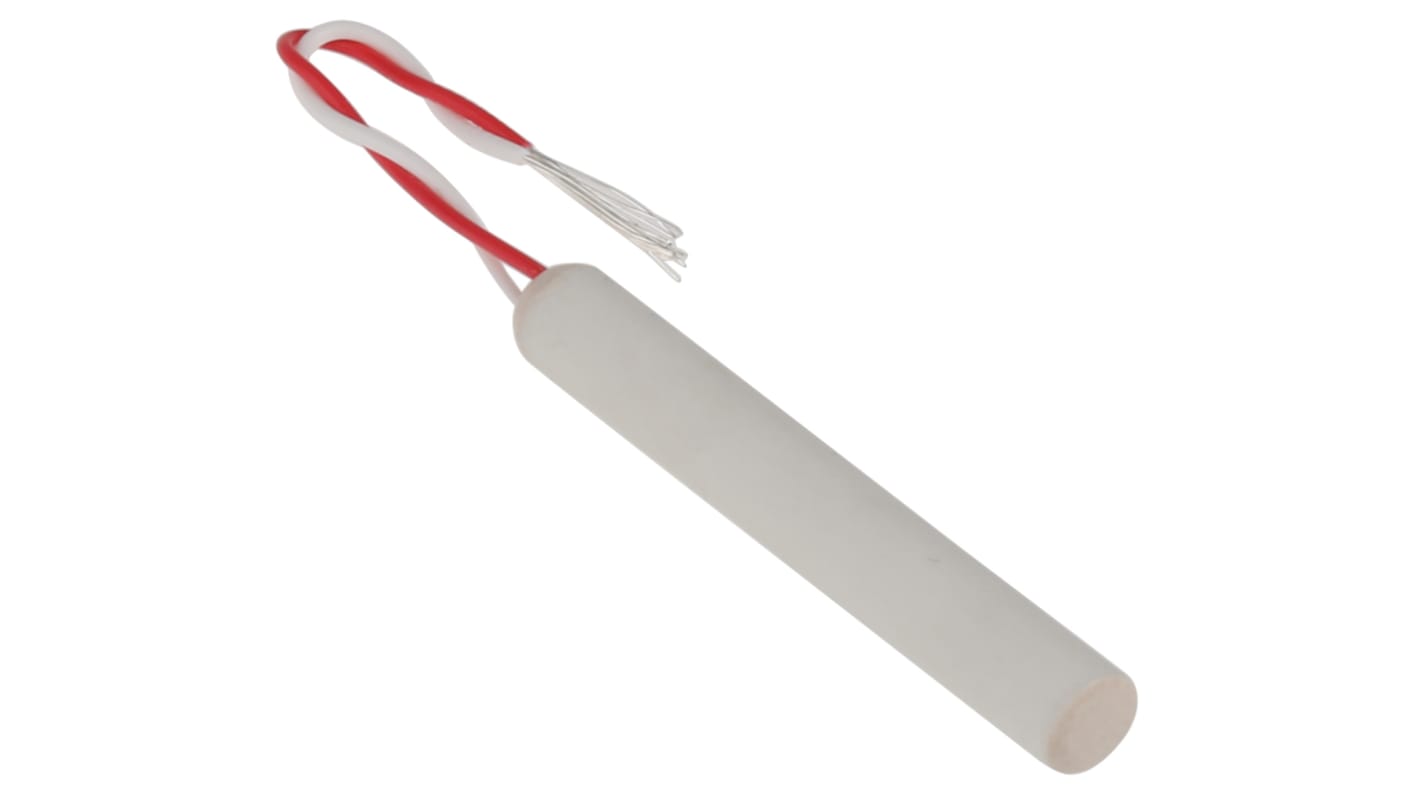
RS PRO PT100 RTD Sensor, 5mm Dia, 35mm Long, 2 Wire, Probe, Class B +250°C Max
- RS庫存編號:
- 237-1641
- Distrelec 貨號:
- 304-25-531
- 製造商:
- RS PRO

可享批量折扣
小計(1 件)*
HK$211.00
訂單超過 HK$250.00 免費送貨
有庫存
- 85 件準備從其他地點送貨
- 加上 158 件從 2026年1月12日 起發貨
**需要更多嗎?**輸入您需要的數量,然後按一下「查看送貨日期」以查詢更多庫存和送貨詳細資訊。
單位 | 每單位 |
|---|---|
| 1 - 5 | HK$211.00 |
| 6 - 29 | HK$205.90 |
| 30 + | HK$169.50 |
* 參考價格
- RS庫存編號:
- 237-1641
- Distrelec 貨號:
- 304-25-531
- 製造商:
- RS PRO
規格
產品概覽和技術數據資料表
法例與合規
產品詳細資訊
透過選取一個或多個屬性來查找類似產品。
選取全部 | 屬性 | 值 |
|---|---|---|
| 品牌 | RS PRO | |
| Sensor Type | PT100 | |
| Probe Length | 35mm | |
| Probe Diameter | 5mm | |
| Minimum Temperature Sensed | -50°C | |
| Maximum Temperature Sensed | +250°C | |
| Termination Type | Bare Wire Tail | |
| Cable Length | 50mm | |
| Probe Material | Platinum | |
| Process Connection | Probe | |
| Number Of Wires | 2 | |
| Accuracy | Class B | |
| 選取全部 | ||
|---|---|---|
品牌 RS PRO | ||
Sensor Type PT100 | ||
Probe Length 35mm | ||
Probe Diameter 5mm | ||
Minimum Temperature Sensed -50°C | ||
Maximum Temperature Sensed +250°C | ||
Termination Type Bare Wire Tail | ||
Cable Length 50mm | ||
Probe Material Platinum | ||
Process Connection Probe | ||
Number Of Wires 2 | ||
Accuracy Class B | ||
- COO (Country of Origin):
- GB
Tubular Ceramic Encased Elements
From RS Pro a high-quality and reliable Pt100 PRT (Platinum Resistance Thermometer) or RTD (Resistance Temperature Detector) thin film sensing element encased in a ceramic housing or sheath. This PRT sensing element is designed to be installed into a probe sheath or other equipment and provides accurate and reliable temperature measurement for a wide range of applications.
2 or 4-wire (solid or multi-stranded) thin film PT100 elements to BS1904 1984, class B
The 4-wire types are supplied with fibre glass insulation sleeves
Solid wire is made up from 0.6mm diameter nickel conductor
Multi-stranded is made up from 7/0.2mm, insulated with PTFE
The 4-wire types are supplied with fibre glass insulation sleeves
Solid wire is made up from 0.6mm diameter nickel conductor
Multi-stranded is made up from 7/0.2mm, insulated with PTFE
What is an RTD?
An RTD is a type of temperature sensor based on the correlation between metals and temperature. As the temperature of a metal increases so does its resistance to the flow of electricity. This resistance can be measured and converted to a temperature reading. In a Pt100 RTD, the ’Pt’ stands for platinum (platinum wire or film) and ’100’ means that the temperature sensor has a resistance of 100 Ohms at 0°C. Platinum is the most reliable metal due to its linear resistance to temperature relationship over a large temperature range.
What is a Ceramic Sheathed Thin Film Sensor Element?
A thin film platinum Pt100 sensor consists of a thin layer of platinum (usually 1 micron thick) on a ceramic substrate. This is then covered with a layer of epoxy or glass for protection against high voltages and to maintain a high insulation resistance. The thin layer of platinum results in the sensor having a high resistivity and fast response times to changes in temperature. This thin film temperature sensor is enclosed in a protective ceramic sheath 35mm in length and 5mm in diameter for assembly into a housing, sheath or other equipment allowing it to be used in harsh conditions
Features and Benefits
Applications
These thin film PRT sensors are suitable for surface and immersion applications where protected. Their flat design means they offer a minimally intrusive means of measuring temperatures on flat surfaces. Applications and industries include the following:
• Air conditioning and refrigeration
• Chemical industry
• Plastics processing
• Stoves and grills
• Air, gas and liquid temperature measurement
• Exhaust gas temperature measurement
• Food processing
• Laboratories
• Chemical industry
• Plastics processing
• Stoves and grills
• Air, gas and liquid temperature measurement
• Exhaust gas temperature measurement
• Food processing
• Laboratories
Frequently Asked Questions
How Does a PRT Temperature Sensor Work?
The PRT temperature sensor works by placing the sensor element (or process end) into the equipment or process that requires temperature measurement. As the temperature of the platinum resistance thermometer increases it’s resistance to the flow of electricity increases. For every increase per degree of temperature the electrical resistance also changes by a set ratio, this is called the temperature coefficient. For platinum, this ratio is .00385 ohm/ohm/°C which means for a Pt100 with a 100 ohm resistance the increase in resistance per degree of temperature would be 0.385 ohms. The total resistance reading can, therefore, be measured and converted into temperature.
How is the Resistance Measured?
The resistance generated by the temperature sensor is measured by passing current through one of the wires to produce a voltage. This voltage is then measured using a suitable bridge or voltmeter and the resistance calculated in ohms using Ohm’s Law (R=V/I). Once the resistance is known you can convert it to a temperature reading using a calibration equation or a conversion table. A temperature measurement device or calibrator can also be connected to the leads of the probe that will automatically convert the measured resistance into a temperature reading.
相关链接
- RS PRO PT100 RTD Sensor 35mm Long Probe, Class B +450°C Max
- RS PRO PT100 RTD Sensor 35mm Long Probe, Class B +450°C Max
- RS PRO PT100 RTD Sensor 35mm Long Probe, Class B +250°C Max
- RS PRO PT100 RTD Sensor 35mm Long Probe, Class B +250°C Max
- RS PRO PT100 RTD Detector 15mm Long Class B +650°C Max
- RS PRO PT100 RTD Detector 15mm Long Class B +650°C Max
- RS PRO PT100 RTD Detector 25mm Long Class B +650°C Max
- RS PRO PT100 RTD Detector 8mm Long Class B +650°C Max